
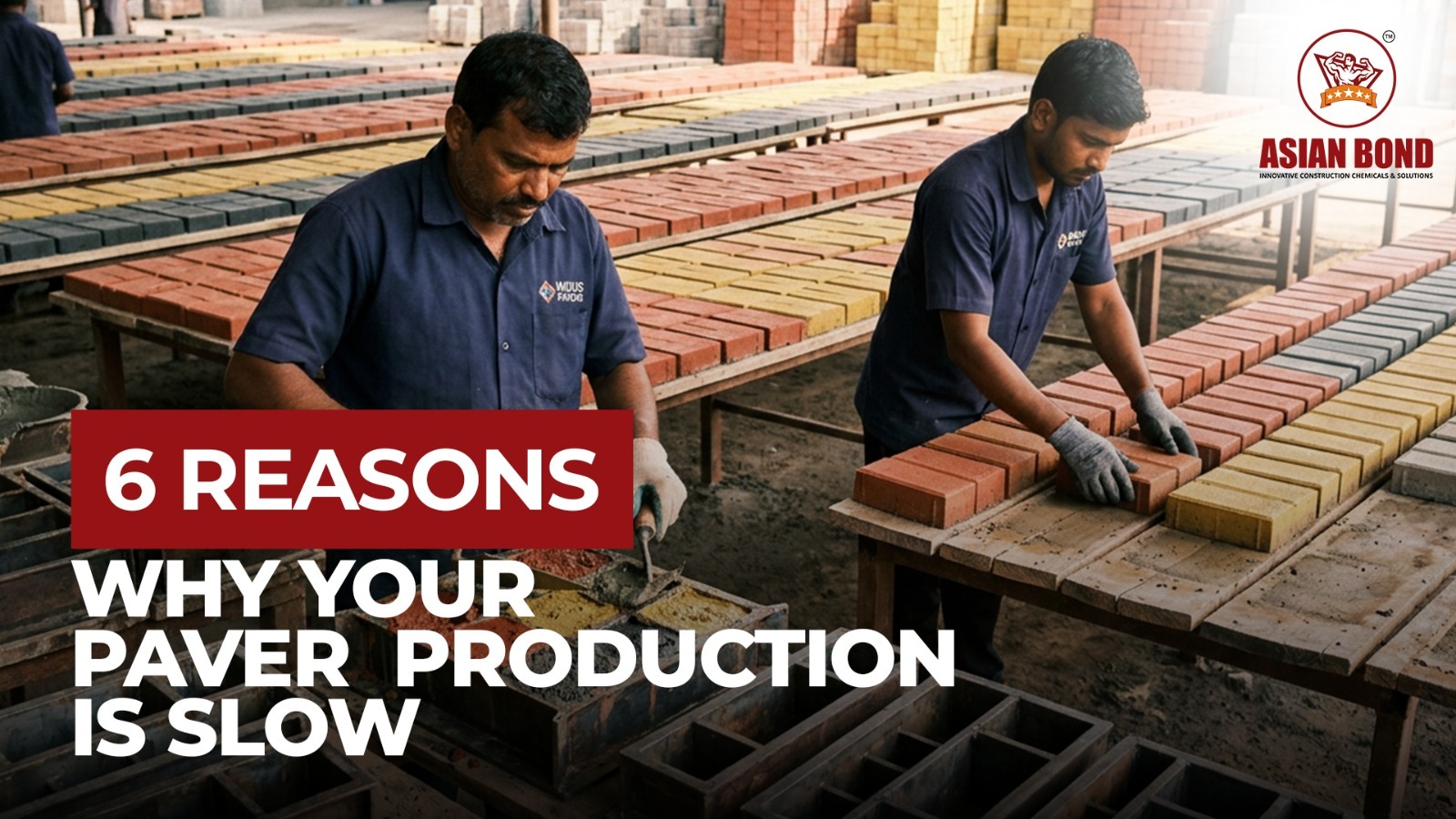
6 Reasons Why Your Paver Production Is Slow
In the competitive paver block manufacturing industry, every production cycle matters. If your plant is producing fewer blocks than expected, it directly affects delive...
In the competitive paver block
manufacturing industry, every production cycle matters. If your plant is
producing fewer blocks than expected, it directly affects delivery timelines,
customer satisfaction, and overall profitability. While many manufacturers
blame machinery, the real cause often lies in the production process, raw
materials, or the concrete admixture being used.
Here are six common reasons why your
paver production is slow and how you can fix them.
1. Slow Setting Time
One of the biggest reasons for
reduced production is slow concrete setting. When paver blocks take longer to
gain initial strength, moulds remain occupied for extended periods, limiting
the number of production cycles you can complete each day.
Solution:
Use a high-performance concrete hardener like Asian Bond Concrete Harderner
that accelerates early strength development, allowing faster demoulding and
quicker mould reuse.
2. Poor Concrete Workability
Concrete that is too stiff or
inconsistent slows down mould filling and vibration, resulting in uneven
compaction and surface defects. This increases production time and the chances
of rejected blocks.
Solution:
Maintain the correct water-cement ratio and use a reliable admixture that
improves workability without compromising strength.
3. Low-Quality Raw Materials
The quality of cement, aggregates,
and sand has a significant impact on production efficiency. Inferior materials
can cause weak blocks, poor finishing, and frequent quality issues, ultimately
slowing down manufacturing.
Solution:
Invest in quality raw materials and pair them with a trusted concrete hardener
like Asian Bond Concrete Harderner to improve consistency and overall
performance.
4. Frequent Breakage During Demoulding
If paver blocks chip or crack during
demoulding, operators are forced to slow the process to minimize damage. This
not only reduces daily output but also increases material wastage.
Solution:
Asin bond concrete hardener helps blocks achieve higher early strength,
reducing breakage and enabling faster, smoother demoulding.
5. High Rejection Rate
Surface imperfections, inconsistent
strength, and poor finishing can result in a high rejection rate. Every
rejected block means wasted material, labour, and production time.
Solution:
Optimize your concrete mix and use a proven admixture that enhances compressive
strength, improves surface finish, and delivers consistent quality.
6. Using the Wrong Concrete Admixture
Not all concrete admixtures deliver
the same results. Using a low-quality or unsuitable product may fail to improve
workability, strength, or setting time. As a result, production efficiency
suffers.
Solution:
Choose a concrete hardener specifically designed for paver block manufacturing.
The right product can provide:
●
Faster setting and demoulding
●
Better workability
●
Higher compressive strength
●
Improved surface finish
●
Reduced water permeability
●
Increased daily production capacity
Conclusion
Improving paver production isn't
always about upgrading your machinery. Small improvements in your concrete mix
design and the use of a high-quality concrete hardener can significantly
increase production speed, reduce rejection rates, and improve product quality.
If you're looking to maximize output
while maintaining consistent strength and finish, Asian Bond offers a
reliable solution trusted by manufacturers across the industry ie Asian Bond Concrete Hardener
✔
Faster setting support
✔
9-hour demoulding
✔
No curing required
✔
Reduced production interruptions
✔
Better workflow efficiency
Speed Up Your Production with Asian Bond
Recommended Dosage:
350 ml per 50 kg Cement Bag
Available Packaging:
●
250 kg Drum
●
62.5 kg Gallon
Speed up your production. Switch to
Asian Bond today!
+91 95755 55588 | +91 9650939667 |
+91 92384 11455