MANUFACTURER & EXPORTER
Read the latest insights, application guides, and industry news about concrete hardener solutions.
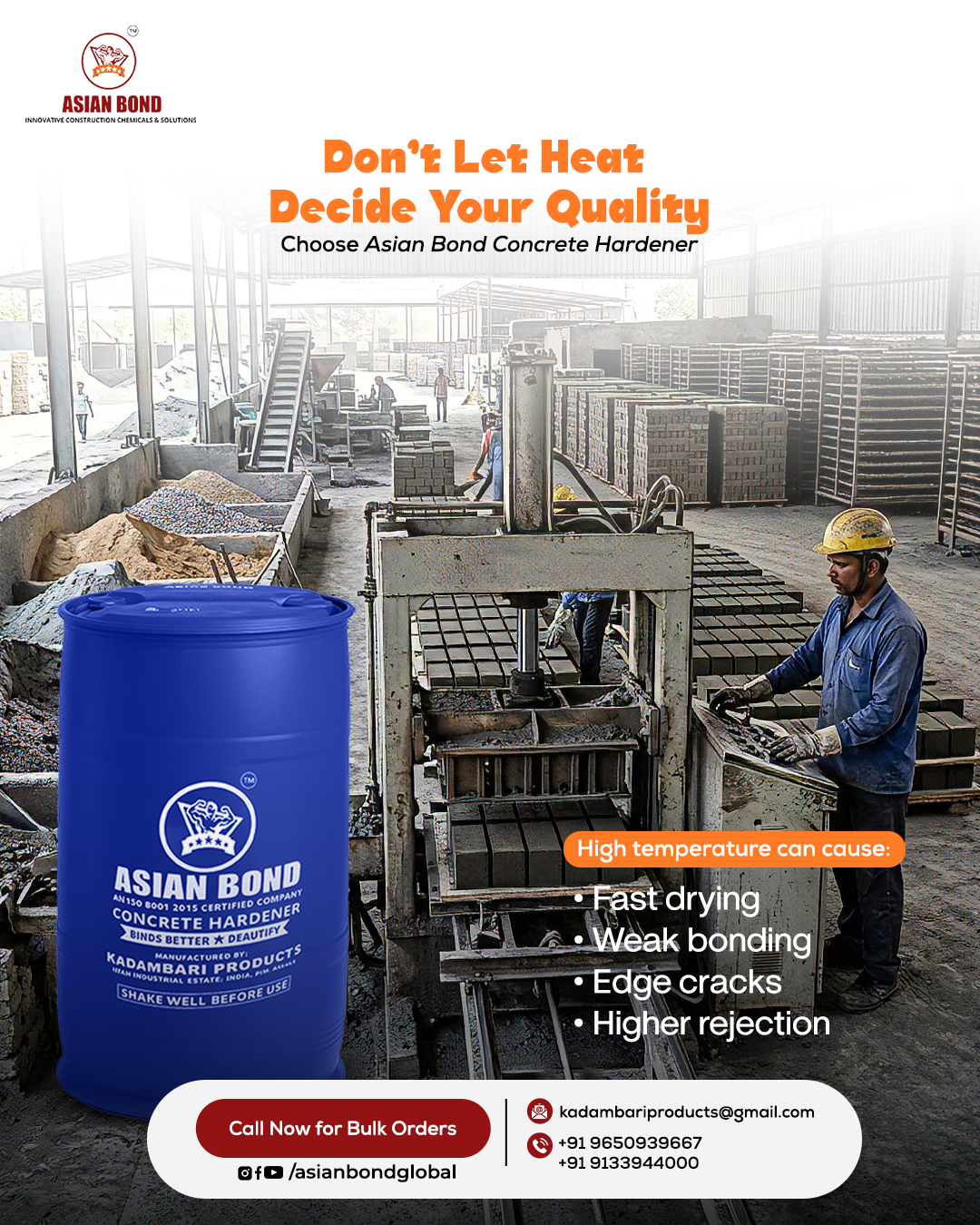
Concrete forms the foundation of most modern structures. From warehouses and factories to parking garages and commercial buildings, concrete floors experience constant pressure from heavy loads, foot traffic, and environmental exposure. Over time, untreated surfaces may begin to crack, wear down, or produce dust, reducing both durability and appearance.
Concrete is widely used in modern construction because of its strength and durability. However, over time even well-constructed concrete surfaces can develop problems such as cracking and dusting. Industrial floors, sidewalks, parking decks, and structural slabs often face constant mechanical stress, temperature fluctuations, and environmental exposure.
Construction chemicals play a critical role in modern building projects. Products such as waterproofing compounds, sealants, bonding agents, curing accelerators, and surface hardeners enhance durability and protect structures from environmental damage. However, these materials are sensitive to storage conditions and handling practices.
In the construction industry, quality and reliability are essential. Builders, contractors, and engineers depend on materials that perform consistently under demanding conditions. To ensure that materials meet international quality standards, certifications play a crucial role. One of the most widely recognized certifications worldwide is ISO certification.
Modern construction relies heavily on specialized chemical solutions to improve durability, strength, and long-term structural performance. Waterproofing compounds, sealants, curing agents, and surface hardeners protect buildings from environmental exposure, mechanical stress, and gradual material degradation.
In construction and infrastructure development, material selection directly influences durability, compliance, and long-term performance. Certifications such as ISI, ASTM, and BIS are not merely labels — they indicate that a product has undergone structured testing and meets defined technical benchmarks.
Modern construction demands materials that deliver durability, load-bearing strength, and long-term performance. Whether for residential housing, commercial complexes, or industrial facilities, contractors increasingly prioritize solutions that extend structural lifespan. Liquid concrete hardener for bricks has emerged as a high-performance treatment that enhances compressive strength, improves surface density, and protects against moisture, abrasion, and weather exposure.
Even well-constructed concrete surfaces deteriorate over time due to continuous load exposure, environmental stress, and operational wear. Cracking, dusting, premature abrasion, and surface weakening commonly occur in factories, parking areas, warehouses, walkways, and brick structures. When concrete loses strength, it not only reduces structural efficiency but also increases maintenance costs and safety risks.
Road construction is one of the most demanding segments in civil engineering. Pavements endure continuous heavy vehicle loads, temperature fluctuations, rainfall exposure, and environmental stress. Durability is not determined by thickness alone — internal material enhancement plays a critical role. Concrete hardener solutions are increasingly used to extend service life and reduce premature deterioration.